 +86 21 51096910
 sales@welsobio.com / marketing@welsobio.com




+86 21 51096910
sales@welsobio.com / marketing@welsobio.com
In molecular biology, pharmaceutical research, food testing, environmental analysis, and other laboratory applications, sample concentration is a common and critical step. Compared with traditional concentration methods such as rotary evaporation and nitrogen blowdown, a vacuum centrifugal concentrator offers significant advantages for processing small-volume and heat-sensitive samples, including low-temperature evaporation, high recovery rates, and batch processing capability.
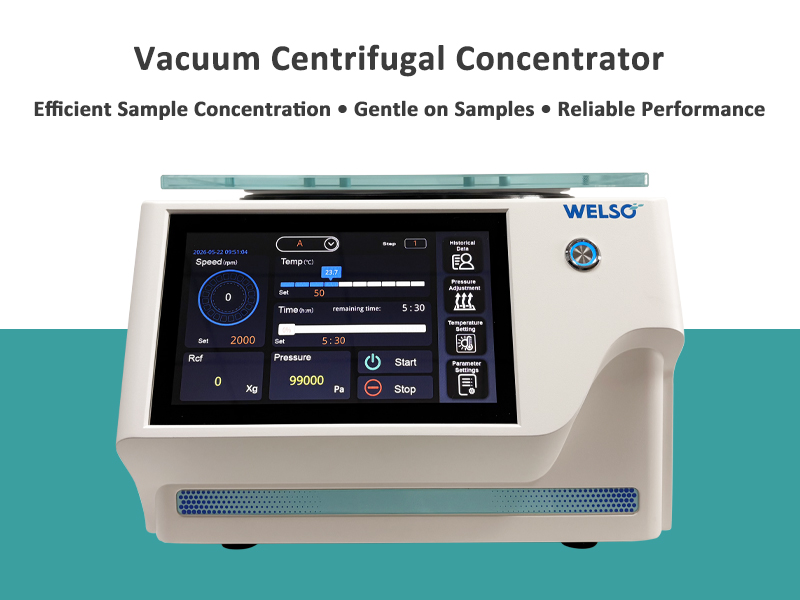
As a professional laboratory equipment manufacturer, Welso provides advanced vacuum centrifugal concentrators designed with efficient vacuum systems, precise temperature control, and user-friendly operation, helping laboratories achieve reliable and efficient sample concentration.
1. Working Principle of a Vacuum Centrifugal Concentrator
The vacuum centrifugal concentrator combines two physical mechanisms to achieve rapid and gentle sample concentration.
1.1 Vacuum Reduces the Boiling Point of Solvents
A liquid boils when its vapor pressure equals the surrounding pressure.
Under standard atmospheric pressure, water boils at 100°C. However, when the surrounding pressure is reduced, the boiling point decreases significantly. In a vacuum environment, water can evaporate rapidly at temperatures as low as 30–50°C.
The vacuum pump continuously lowers the pressure inside the chamber, allowing solvents to evaporate efficiently at low temperatures. This is particularly beneficial for preserving heat-sensitive samples such as:
DNA and RNA
Proteins
Peptides
Natural active compounds
Pharmaceutical metabolites
Low-temperature concentration minimizes the risk of thermal degradation and helps maintain sample integrity.
1.2 Centrifugal Force Prevents Bumping and Sample Loss
Although vacuum conditions accelerate evaporation, they can also increase the risk of solvent bumping.
Bumping may result in:
Sample splashing
Tube contamination
Sample loss
Cross-contamination
During operation, the rotor generates centrifugal force that keeps the liquid firmly at the bottom of the tube. Evaporation proceeds smoothly from the liquid surface, ensuring a controlled and stable concentration process.
The combination of vacuum-assisted evaporation and centrifugal stabilization is what distinguishes a vacuum centrifugal concentrator from other concentration technologies.
2. Main Components of a Vacuum Centrifugal Concentrator
2.1 Centrifuge Chamber and Rotor System
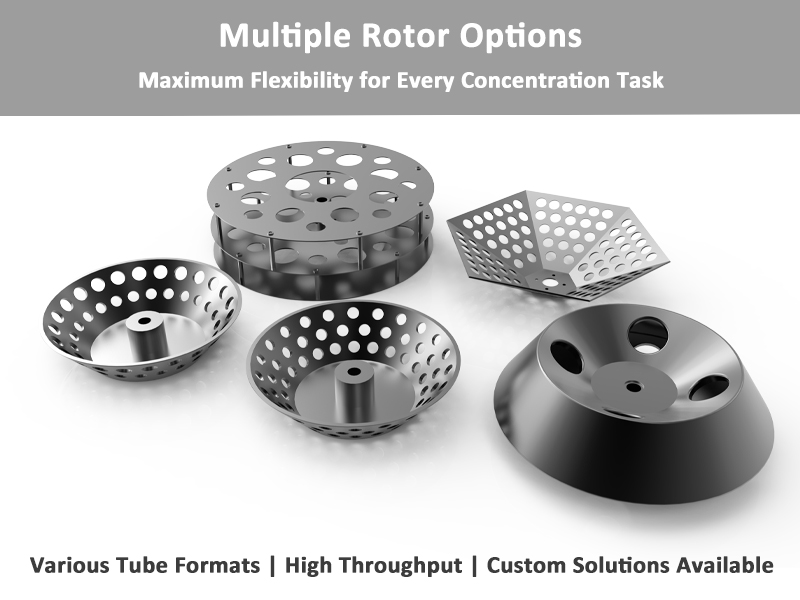
Samples are placed in tubes mounted on a rotating rotor.
Different rotor configurations are available to accommodate various tube sizes, including:
0.2 mL PCR tubes
0.5 mL microcentrifuge tubes
1.5 mL / 2.0 mL microcentrifuge tubes
15 mL centrifuge tubes
50 mL centrifuge tubes
Welso vacuum centrifugal concentrators support multiple rotor options to meet diverse laboratory requirements.
2.2 Vacuum System
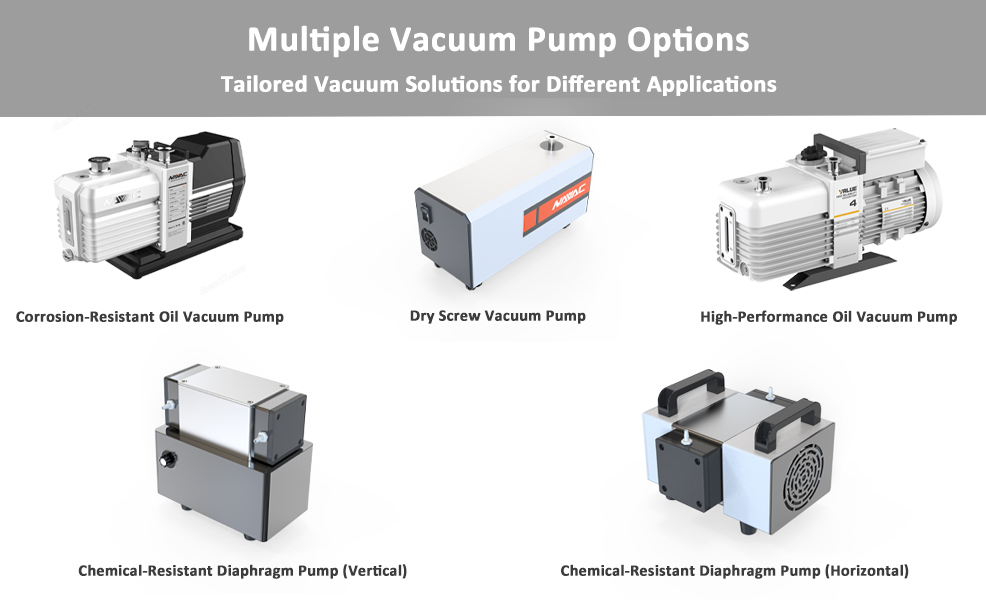
The vacuum system typically consists of:
Vacuum pump
Vacuum tubing
Sealed concentration chamber
The achievable vacuum level directly affects evaporation efficiency.
Generally:
Higher vacuum levels reduce solvent boiling points.
Lower boiling points increase evaporation rates.
However, the highest vacuum level is not always optimal and should be selected according to the solvent characteristics and sample requirements.
2.3 Cold Trap
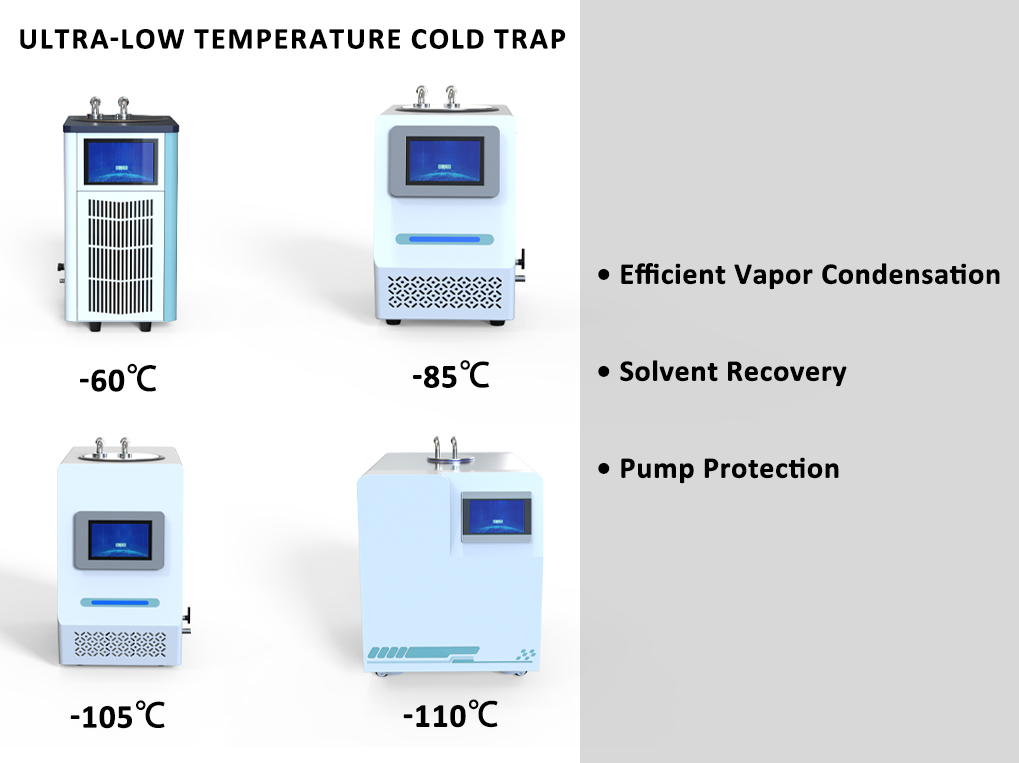
The cold trap is one of the most important yet often overlooked components of the system.
Its primary functions include:
Protecting the Vacuum Pump
Condenses solvent vapors before they enter the vacuum pump, reducing corrosion and extending pump life.
Solvent Recovery
Allows collection and recovery of volatile solvents such as methanol and acetonitrile.
Maintaining Vacuum Stability
Reduces vapor load on the vacuum system and improves overall operating efficiency.
Typical cold trap temperatures range from:
-50°C
-80°C
Lower temperatures depending on the application
2.4 Heating Module
Controlled heating significantly enhances evaporation efficiency.
Typical temperature control ranges include:
Ambient temperature to 65°C
Higher precision control on advanced models
Welso concentrators utilize accurate temperature control systems to maximize evaporation efficiency while protecting sensitive samples.
3. Standard Operating Procedure
Step 1: Balance the Samples
Proper balancing is essential before operation.
Guidelines include:
Place tubes symmetrically in the rotor.
Use balancing tubes for empty positions.
Minimize weight differences between opposing positions.
Improper balancing may cause:
Excessive vibration
Rotor wear
Equipment damage
Step 2: Set Operating Parameters
Rotor Speed
Recommended range:
1,000–2,000 rpm
The purpose is to stabilize the liquid rather than generate high centrifugal force.
Temperature
Sample Type | Recommended Temperature |
DNA/RNA | ≤35°C |
Proteins | ≤35°C |
Peptides | 30–40°C |
Organic solvents | 45–55°C |
Run Time
The concentration time should be estimated based on:
Sample volume
Solvent type
Desired concentration endpoint
Adjustments can be made during operation if necessary.
Step 3: Start the Instrument Correctly
Recommended startup sequence:
Start rotor rotation.
Activate the vacuum system.
This sequence helps prevent sudden solvent bumping during vacuum application.
Step 4: Pre-Cool the Cold Trap
If a cold trap is installed:
Start cooling at least 30 minutes before operation.
Wait until the target temperature is reached.
Proper pre-cooling:
Improves solvent capture efficiency
Protects the vacuum pump
Enhances overall system performance
Step 5: Complete the Run and Retrieve Samples
Recommended shutdown sequence:
Gradually release the vacuum.
Return the chamber to atmospheric pressure.
Stop rotor rotation.
Open the chamber and remove samples.
Never open the chamber before pressure equalization is complete.
4. Common Mistakes and Precautions
Mistake 1: Higher Vacuum Is Always Better
Not necessarily.
For low-boiling solvents, excessive vacuum may:
Cause overly rapid evaporation
Increase splashing risk
Reduce sample recovery
The vacuum level should be optimized according to the solvent properties.
Mistake 2: Higher Temperature Always Improves Efficiency
While elevated temperatures accelerate evaporation, they may damage:
Proteins
Enzymes
Peptides
Bioactive compounds
Protecting sample integrity should always take priority over speed.
Mistake 3: Neglecting Cold Trap Maintenance
Over time, condensed solvent accumulates inside the cold trap.
Failure to clean it regularly may lead to:
Reduced condensation efficiency
Vacuum instability
Potential contamination through backflow
Routine defrosting and cleaning are recommended.
Mistake 4: Directly Drying Mixed Water–Organic Solvent Systems
In mixed solvent systems:
Organic solvents evaporate first.
Residual water becomes increasingly difficult to remove.
For complete drying, it is often advisable to replace water with a volatile solvent such as acetonitrile or methanol before concentration.
5. Comparison with Other Concentration Methods
Method | Suitable Applications | Main Characteristics |
Vacuum Centrifugal Concentrato | Small-volume, heat-sensitive, batch sample processing | Low-temperature evaporation, high recovery, automation |
Rotary Evaporator | Large-volume solvent removal | Fast evaporation but limited batch processing |
Nitrogen Evaporator | Rapid sample pre-concentration | Simple operation but potential sample loss |
Freeze Dryer | Aqueous samples and biological products | Thorough drying but longer processing times |
Conclusion
A vacuum centrifugal concentrator combines vacuum-assisted low-temperature evaporation with centrifugal stabilization, providing a safe, efficient, and reliable solution for concentrating nucleic acids, proteins, peptides, pharmaceuticals, and other sensitive laboratory samples.
Successful operation depends not only on the instrument itself but also on proper procedures, including sample balancing, cold trap pre-cooling, optimized vacuum and temperature settings, and correct startup and shutdown sequences.
With a stable vacuum system, precise temperature control, flexible rotor configurations, and comprehensive safety features, Welso Vacuum Centrifugal Concentrators provide laboratories, research institutes, pharmaceutical companies, and testing facilities with an efficient and dependable sample concentration solution.

Subscribe to our Newsletter & Event right now to updated.



+86 21 51096910

sales@welsobio.com
marketing@welsobio.com

1-1009, National Industrial Design Park, No. 599 Jianzhu Road, Binhu, Wuxi , Jiangsu, China, 214062

Head Office: No. 439 Jinglian Road, Minhang District, Shanghai,China, 201108