 +86 21 51096910
 sales@welsobio.com / marketing@welsobio.com




+86 21 51096910
sales@welsobio.com / marketing@welsobio.com
Experimental Application Based on the Welso TOC2000 Total Organic Carbon Analyzer
In drinking water quality monitoring, total organic carbon (TOC) is an important comprehensive indicator for measuring the level of organic pollution. TOC content directly reflects the overall level of natural organic matter, humus, and exogenous pollutants in water sources, playing a crucial role in water source protection, pollution monitoring, and water quality improvement. According to relevant drinking water standards, the reference limit for TOC in drinking water is 5 mg/L. With the development of detection technology, the challenge of TOC analysis has shifted from "whether it can be detected" to "how to achieve more efficient and sustainable online and offline monitoring."
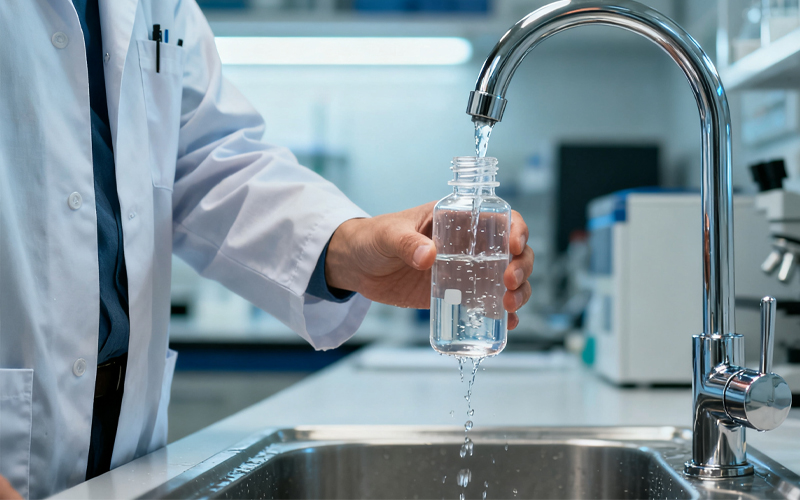
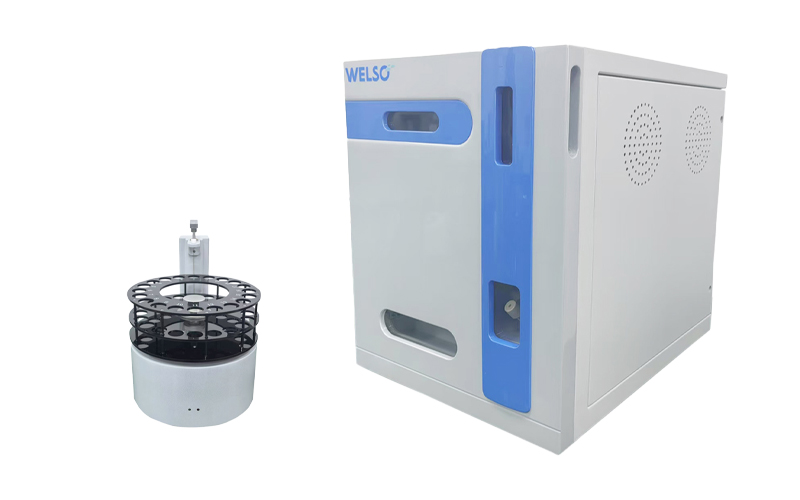
This experiment used the Welso TOC2000 total organic carbon analyzer to perform offline TOC determination in drinking water. The TOC2000 uses ultraviolet persulfate oxidation as its core digestion principle and can be applied to various water bodies, including surface water, groundwater, tap water, and industrial wastewater. It boasts advantages such as ease of operation, no consumables required, and sensitive response, making it a cost-effective solution for laboratory TOC analysis. I. Experimental Section
I. Instruments and Reagents
Instruments
Welso TOC2000 Total Organic Carbon Analyzer
Reagents
Potassium hydrogen phthalate (primary standard)
Sodium persulfate (analytical grade)
Phosphoric acid (analytical grade)
Distilled water (blank)
II. Experimental Methods
Preparation of Standard Solutions
Organic Carbon (TOC) Standard Solutions
TOC Standard Stock Solution (1000 mg/L)
Weigh 2.1255 g of dried potassium hydrogen phthalate, dissolve and dilute to 1000 mL.
TIC Standard Stock Solution (1000 mg/L)
Weigh 4.4085 g of anhydrous sodium carbonate and 3.5000 g of sodium bicarbonate, dissolve and dilute to 1000 mL.
Total carbon standard working solution (TC=100 mg/L, TIC=50 mg/L)
Add 10.00 mL of each standard stock solution to a 200 mL volumetric flask and dilute to volume.
Inorganic carbon standard working solution (TIC=50 mg/L)
Add 10.00 mL of TIC stock solution to a 200 mL volumetric flask and dilute to volume.
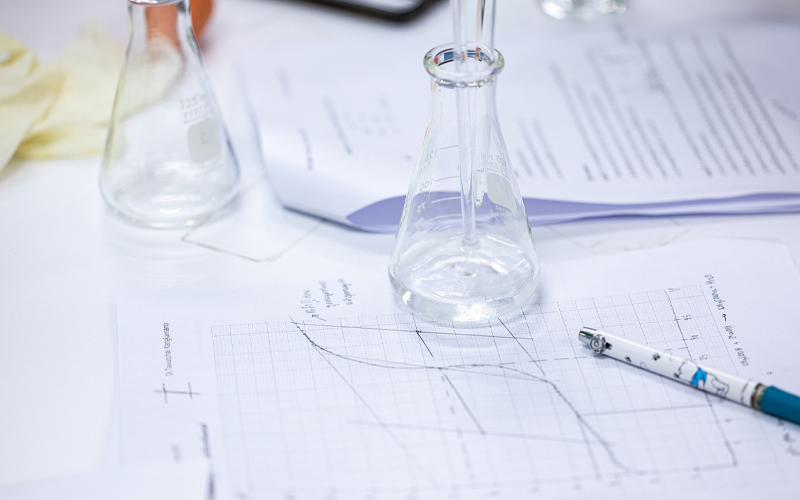
Standard curve plotting
Organic carbon standard series: 0.0, 1.0, 2.0, 5.0, 10.0, 20.0, 50.0 mg/L
Inorganic carbon standard series: 0.0, 0.5, 1.0, 2.5, 5.0, 10.0, 25.0 mg/L
Using equal volumes of sample, plot the calibration curve with "carbon mass" on the x-axis and "integrated area" on the y-axis.
III.Sample Test Results
The TOC difference method (TOC = TC–TIC) was used to conduct three parallel tests on three drinking water samples. The data are as follows:
Table 1 TOC Measurement Results of Drinking Water Samples
sample | Average TC (mg/L) | Average TIC (mg/L) | TOC (mg/L) |
sample 1 | 3.28 | 2.41 | 0.87 |
sample 2 | 1.56 | 1.31 | 0.25 |
sample 3 | 1.88 | 1.17 | 0.71 |
IV. Results and Analysis
The experimental results show that the TOC concentrations of the three drinking water samples were 0.87 mg/L, 0.25 mg/L, and 0.71 mg/L, respectively, all far below the reference limit of 5 mg/L specified in the relevant standards.
Although the TOC index itself meets the requirements for drinking water, whether it meets the standard for direct consumption still needs to be determined in conjunction with other items such as turbidity, microorganisms, and heavy metals.
V. Conclusion
The Welso TOC2000 total organic carbon analyzer demonstrated the following characteristics in this experiment:
Consumable-free design, low operating cost
Highly efficient UV persulfate oxidation, sensitive response, and good repeatability
Fast detection speed, suitable for batch sample processing
Can be used with an autosampler to improve experimental efficiency and consistency

Subscribe to our Newsletter & Event right now to updated.


+86 21 51096910

sales@welsobio.com
marketing@welsobio.com

1-1009, National Industrial Design Park, No. 599 Jianzhu Road, Binhu, Wuxi , Jiangsu, China, 214062

Head Office: No. 439 Jinglian Road, Minhang District, Shanghai,China, 201108